
By Adam Ducquet, Managing Director, 121 Group
Every few months someone declares SEO dead. This time the reason is AI search: Google’s AI Overviews sit above the blue links, and ChatGPT answers questions that used to start with a Google search. If you run a website or a small business, it’s fair to wonder whether the work you’ve put into ranking is about to stop paying off.
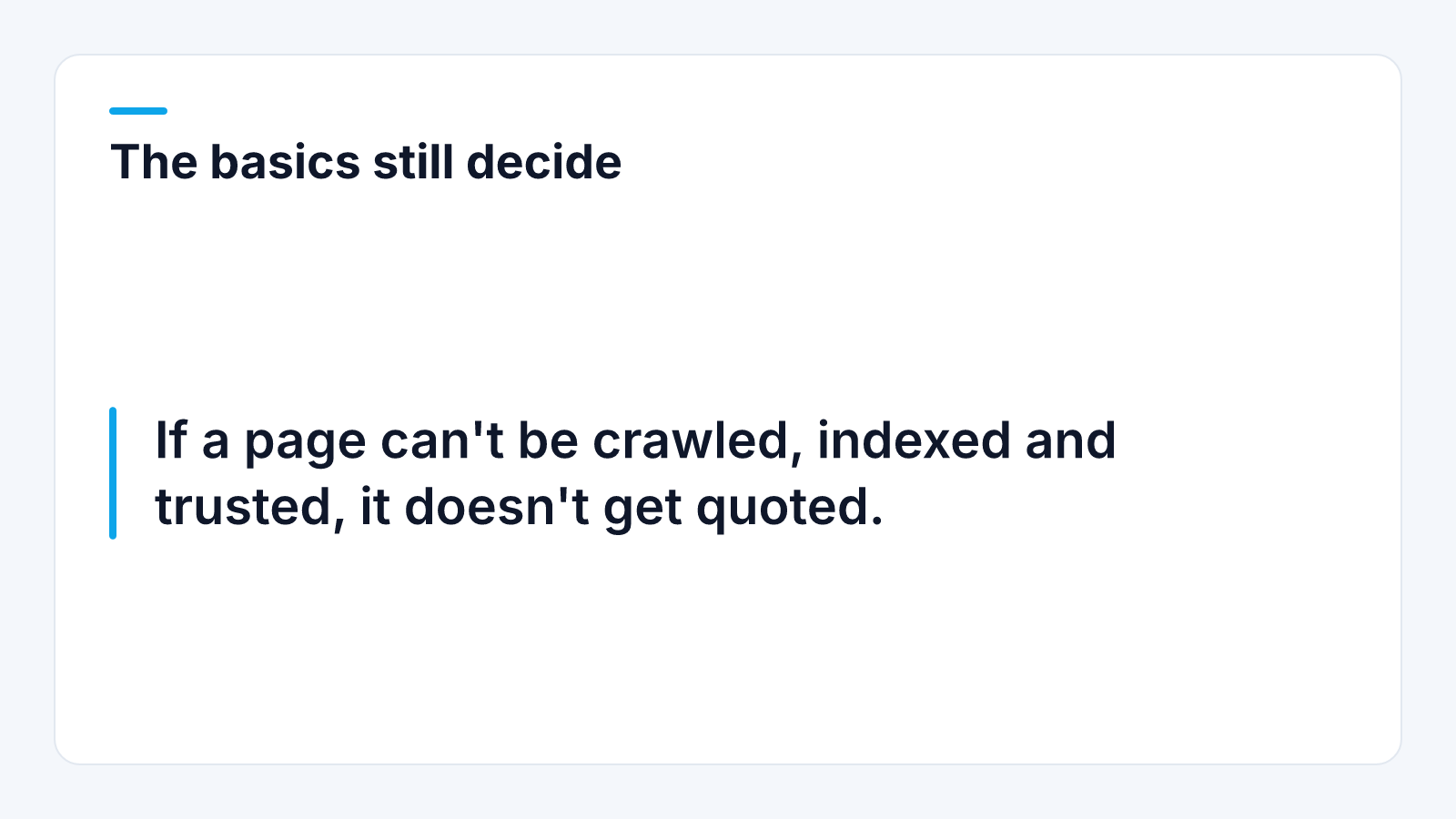
The way people find you is changing, but most of what gets you found is not. AI answers are built on top of search indexes. If a page can’t be crawled, indexed and trusted, it doesn’t get quoted.
How AI tools pick what to cite
Neither ChatGPT nor AI Overviews knows your business the way a person does. When a question needs current or specific information, they run a retrieval step. They query an index, pull back a set of pages, read the relevant passages and write an answer, usually with links to some of those pages.
Google is open about this. Its Search Central documentation on AI features says there are no extra technical requirements to appear in AI Overviews beyond normal search eligibility. The page must be indexed and eligible to show a snippet. It uses the same crawler, the same index and the same quality systems. On the OpenAI side, ChatGPT search draws on third-party search providers, with Microsoft’s Bing a long-standing partner, plus OpenAI’s own crawler, OAI-SearchBot, which OpenAI documents alongside its other bots.
So selection happens in two stages. First, your page has to be in the pool the system retrieves from. That is classic SEO: crawlability, indexing, relevance, links and reputation. Second, the model has to find a passage on your page that answers the question cleanly enough to use. That second stage is where AI search behaves differently from a page of ten blue links.
It’s common to see a page ranking fifth get cited ahead of the page ranking first, simply because it states the answer in one clear paragraph while the top result buries it under 600 words of preamble.
What this means for clicks
This is the part people worry about, and they have reason to. When an AI answer covers a simple question well, some people will no longer need to click. Definitions, quick conversions and “what time does it open” queries were always thin traffic, and many site owners are reporting fewer visits to that kind of content.
Commercial queries tend to behave differently. Someone comparing accounting software, choosing a builder or working out which lens suits their camera still wants detail, pricing, reviews and a business they can contact. AI answers on those topics often name brands and link to sources, and the people who click are usually further along in deciding.
That’s why rankings and raw traffic are poor ways to judge SEO now. Track enquiries, sales and leads from organic and referral sources instead. In Google Analytics 4, the traffic acquisition report shows referrals from chatgpt.com and perplexity.ai. Older ChatGPT referrals can appear as chat.openai.com, so include both, and expect some AI clicks to arrive with no referrer at all and land in Direct. Search Console currently counts AI Overview clicks with normal Google organic clicks, so you can’t separate them cleanly yet.
Practical steps to appear in AI answers
None of this needs a new toolset. It needs the basics done properly, with extra attention to how content is written.
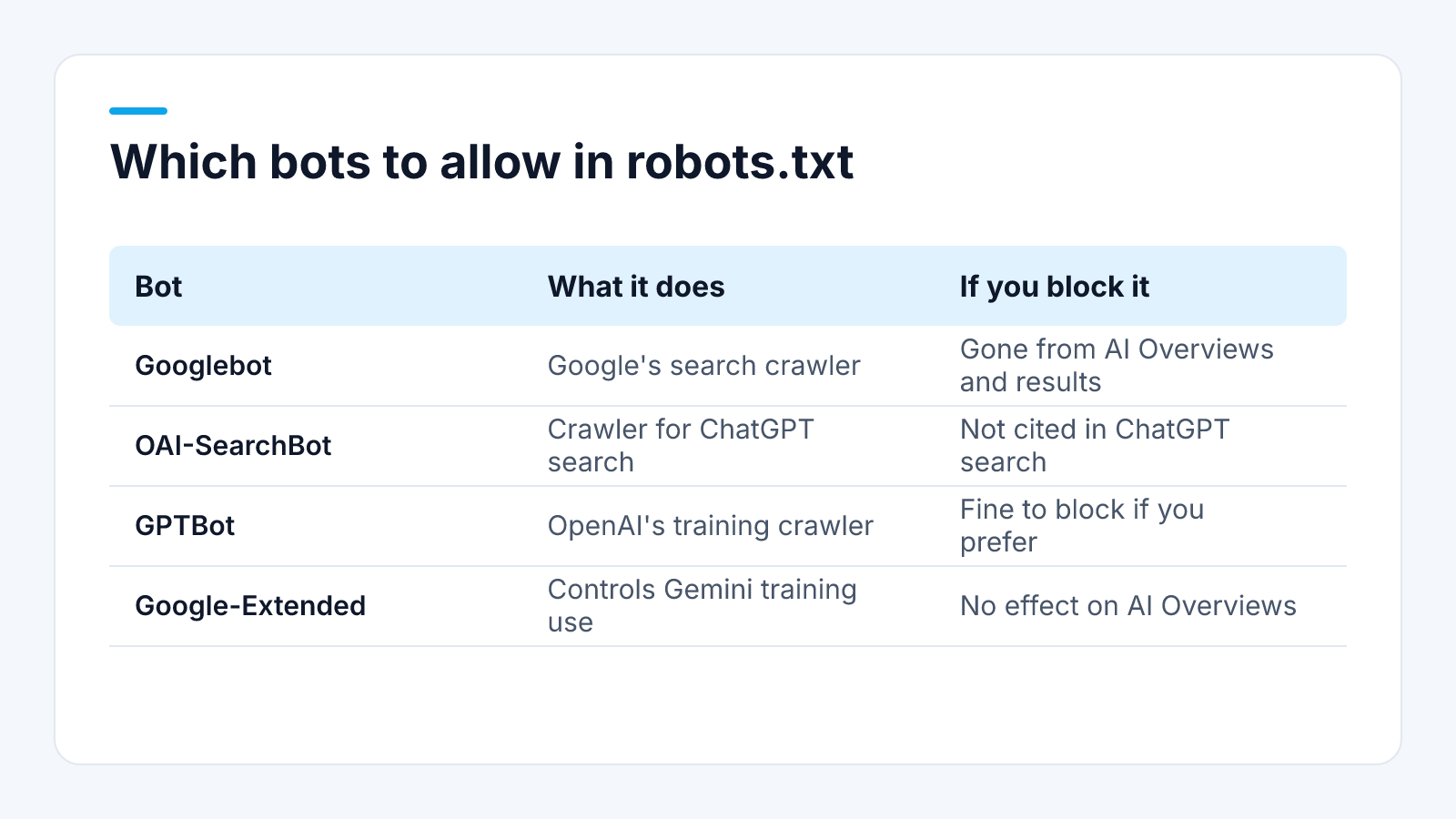
- Make sure the bots can get in. Check your robots.txt file. Blocking Googlebot removes you from AI Overviews as well as normal results. If you want to be cited in ChatGPT search, don’t block OAI-SearchBot. GPTBot is OpenAI’s training crawler and can be blocked separately if you prefer. Google-Extended controls whether your content is used for Gemini training. It does not affect AI Overviews.
- Answer the question early. Put a direct two to three sentence answer at the top of each section, then expand. Use the question itself as the subheading where it reads naturally.
- Structure pages so passages stand alone. Use short sections, descriptive H2s, tables for comparisons and numbered steps for processes. A model lifting one paragraph should get a complete thought.
- Be specific. Include prices, dimensions, timeframes, locations and model numbers. Vague copy gives a model nothing worth quoting.
- Add schema markup. LocalBusiness, Product and FAQPage schema help search engines confirm what a page and a business are. Schema won’t lift your rankings on its own, but it removes ambiguity.
- Keep business details consistent. Use the same name, address and phone number on your site, your Google Business Profile, Bing Places and directories. AI answers about local services often draw on these.
- Earn mentions from real sites. Search ranking systems have long favoured sites that other reputable sites reference, and those rankings decide which pages are available for retrieval in the first place. Industry press, partner sites, reviews and genuine coverage all help.
- Show who wrote it. Author names, credentials and a clear About page help Google’s quality systems and readers alike.
Some of the AI-specific work is hard to do yourself. You need to test how often your brand appears in ChatGPT and AI Overview answers for your key queries, which competitors get named instead, and what the cited pages have that yours lack. An AI SEO agency can run those checks across dozens of prompts and restructure content around the gaps. A small site can do a rough version by hand in a spreadsheet.
A quick example
Picture a small bike shop with a blog post called “Our thoughts on e-bikes”. It rambles about the owner’s first e-bike, mentions servicing in the last paragraph and never states a price. Now rewrite it as “How much does an e-bike service cost?” Open with the shop’s actual price range and what’s included, add a table comparing a basic service with a full one, and mark up the business with LocalBusiness schema.
The page is now easier for Google to rank and far easier for an AI system to quote. Same shop, same expertise, written so a machine can find the answer.
Why traditional SEO still carries the load
Technical problems hurt you in AI answers just as they do in normal rankings: slow pages, broken internal links, duplicate content and JavaScript that hides text from crawlers. The sites holding up are the ones search engines can crawl easily, with real substance and a reputation beyond their own domain. If you bring in an SEO team such as 121 Group, expect them to start where you would yourself: fix the technical base, write for the questions customers actually ask, then build authority over months rather than weeks.
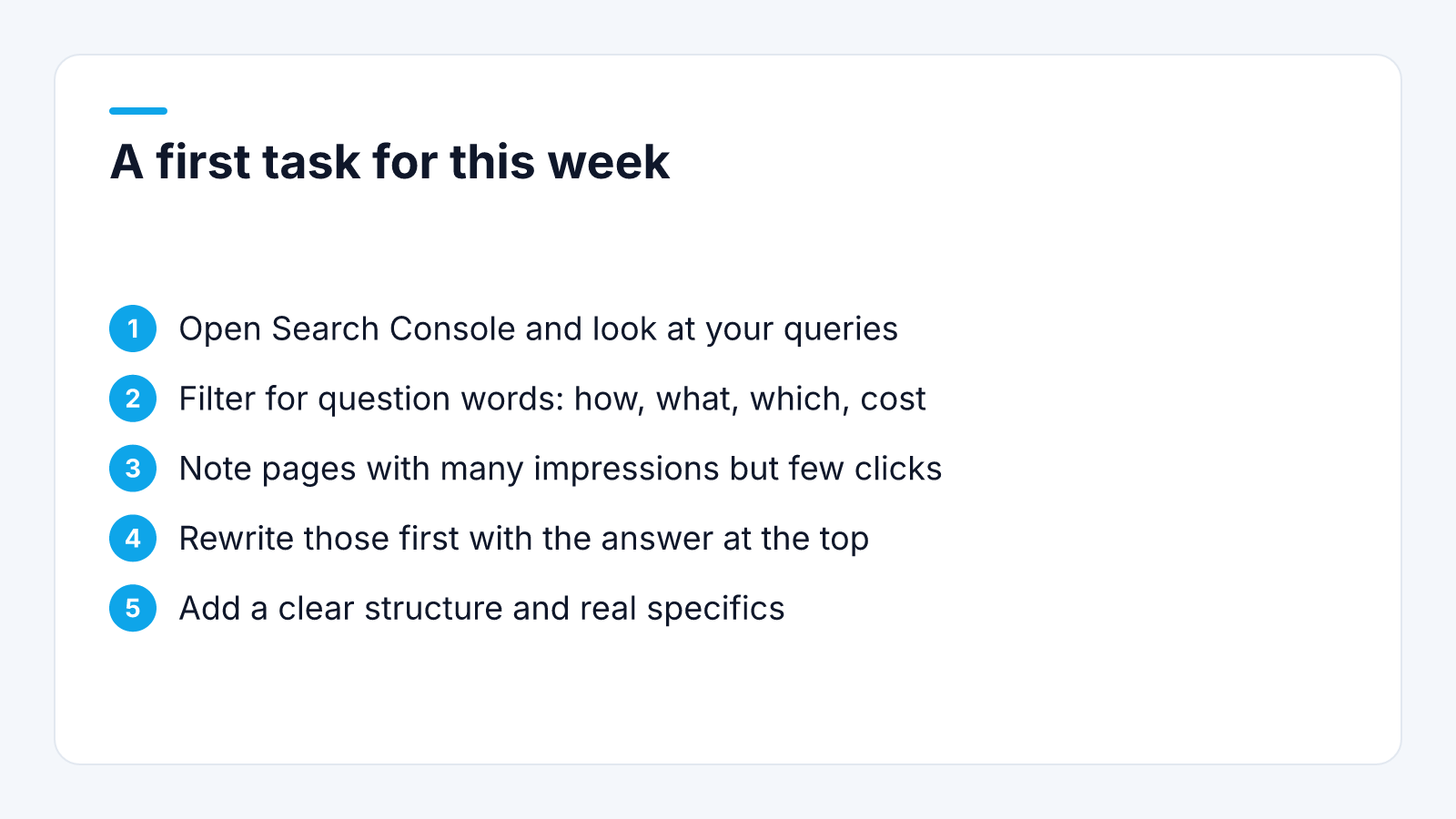
A good first task for this week is to open Search Console and filter queries for question words such as how, what, which and cost. Note the pages with plenty of impressions but few clicks, and rewrite those first with the answer at the top, a clear structure and real specifics. That one job improves your chances in Google’s rankings and in AI citations at the same time.
Sources
 |
Adam Ducquet
Managing Director, 121 Group Adam Ducquet is part of the team at 121 Group, an Australian digital marketing agency founded in 2005 with teams in Melbourne, Sydney and Perth.
|